
Review
Featured artist: Jessica Swank
Presenting her concept, artist Jessica Swank included some stirring words: skin, bone, blood, brains. These words sent my stomach into shivers. And yet the reality of her concept drew on my sense of wonder because already we live in a technologically intertwined world. Do I not feel this shiver continuously: the technological requirement of an uncontrollable unknown? Does the existence of the technological environment around my society not reverberate like a continuous humming? And these words she exhibits through art, will they doubly increase the shiver into a quake? These words are all substances meant to be hidden. And through art they are exposed. And with the exposure there is vulnerability. Equally important, these words are structures of life. Are these foundational structures meant to be so poignantly visible? Is that the question she is asking? I listened for a question to be asked.
As I listened, I noticed something unique from this artist; she did not speak a guiding question. Guiding questions so often function as the pavement on which an artist expects an audience to traverse through the exhibition. She asked no questions. Instead, she made statements:
“This is metal and this is bone.”
“There is tension…”
“This is skin…”
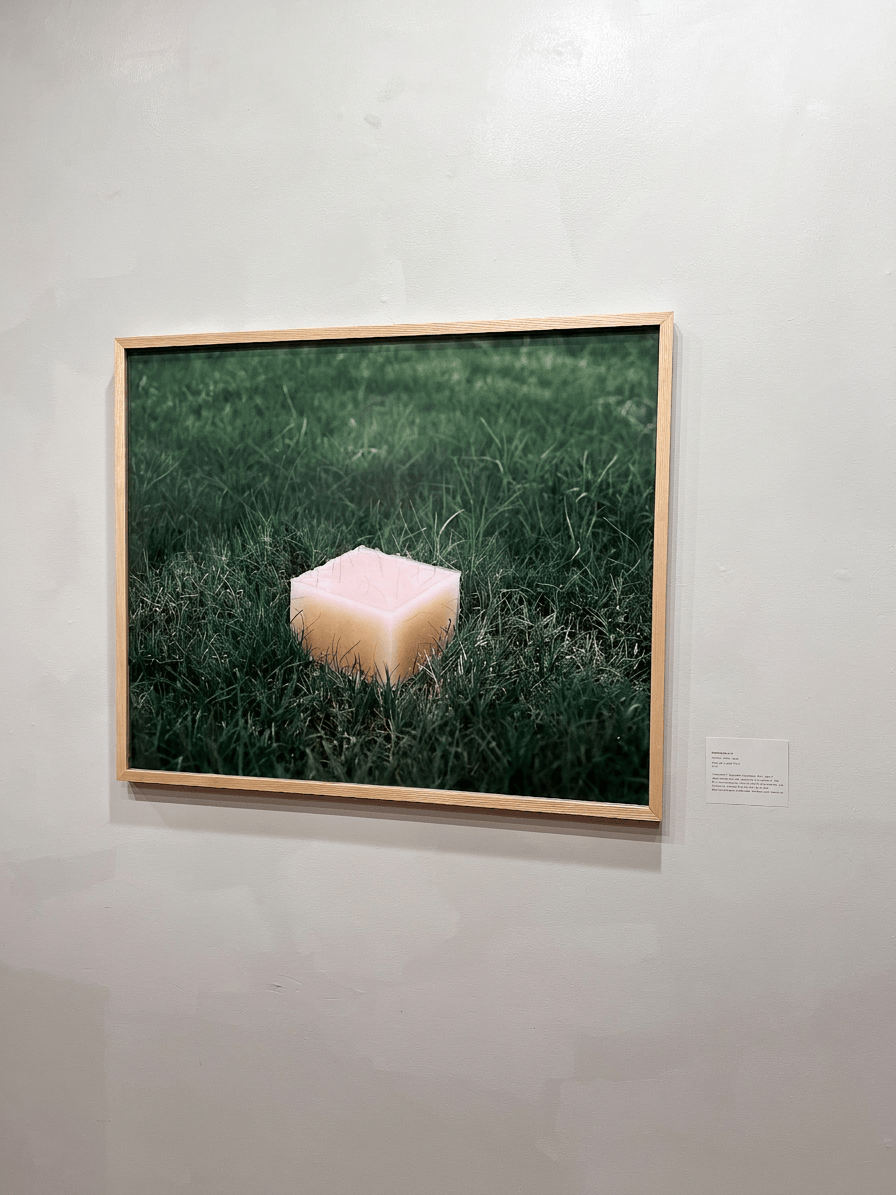
“This is a photo of…”
These statements describe what exists. Her art exists. It is here. And within the negative space between the objects of her creation, where questions could create paths from one to the next, they each remain separate, one from the next.
At the conclusion of her lecture, Ms. Swank invited the audience to ask her questions. I had none for the artist. My questions were reserved for the art. I wanted to know from the art, “Are you asking me something? Are you telling something? Are you creating an experience, here and now, for me to feel? What do you have to tell me? Will I learn? Will I gain insight? Will previously held perceptions, attitudes, or comforts be altered because of what you speak?”
I walked from the lecture hall to the gallery with a sensation of curiosity mixed with apprehension because I wondered what sort of confrontation with technology and individual existence awaited me. Would it hurt? Would I resist the confrontation?
I asked of the art. I listened.
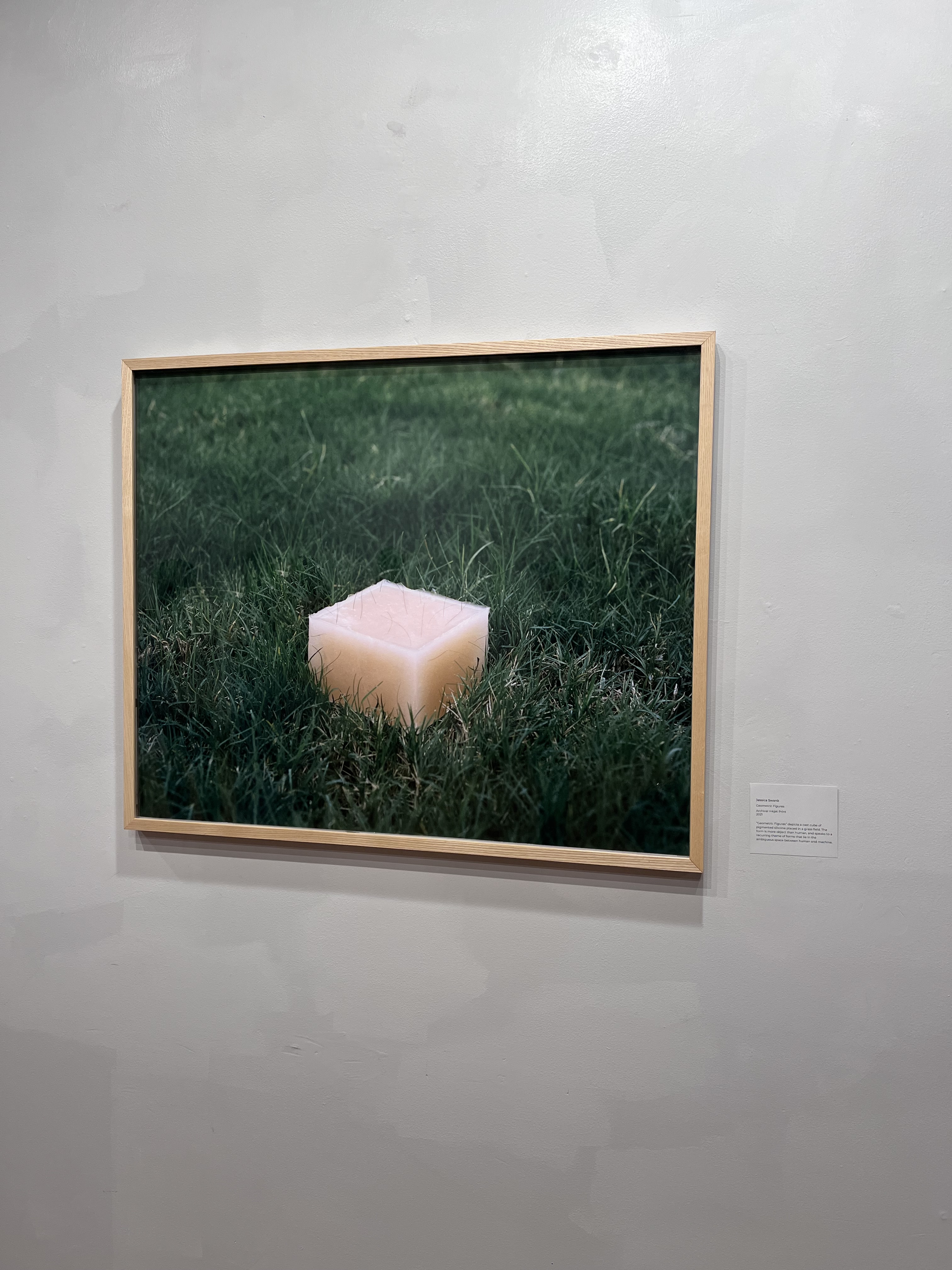
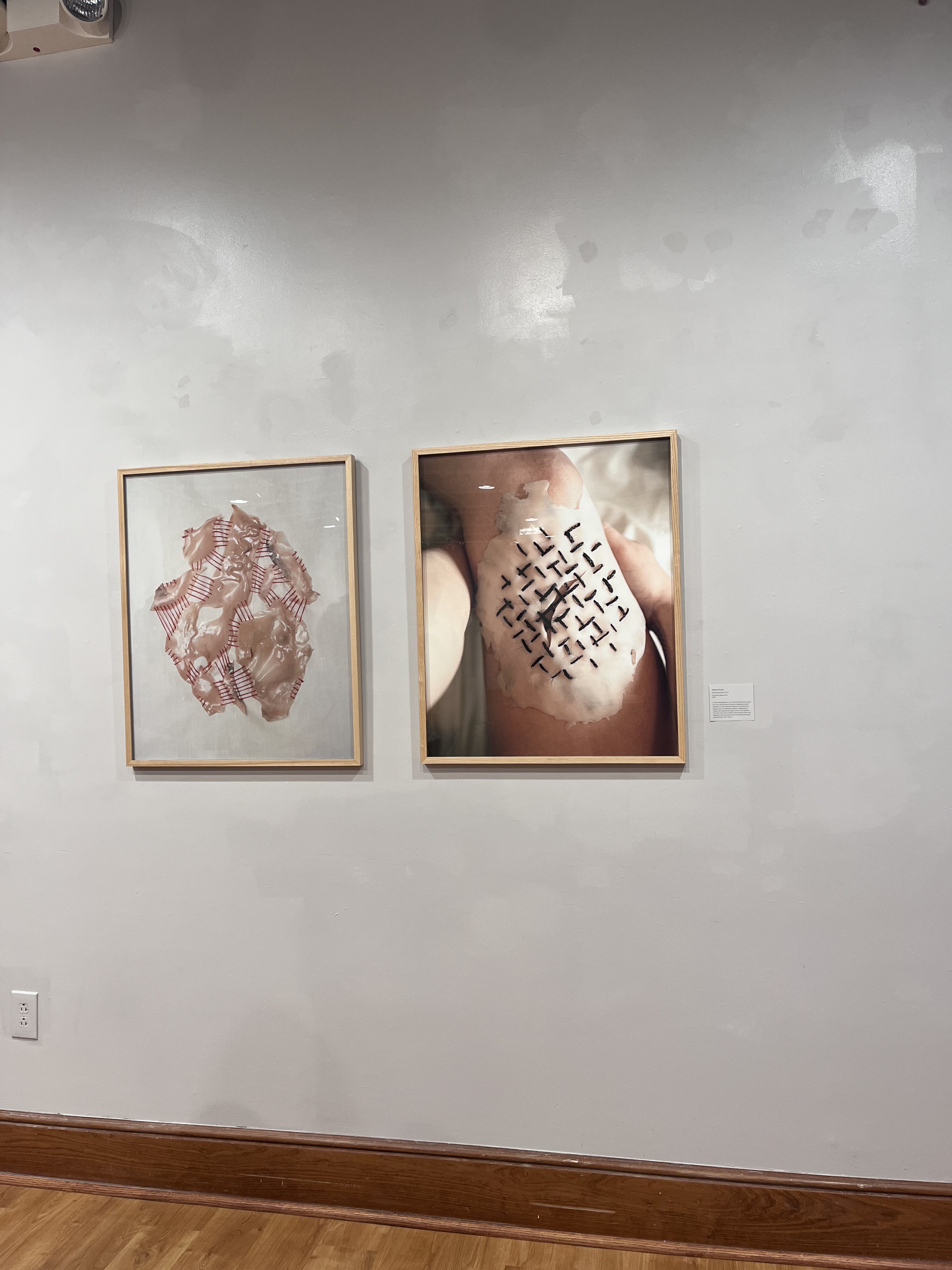
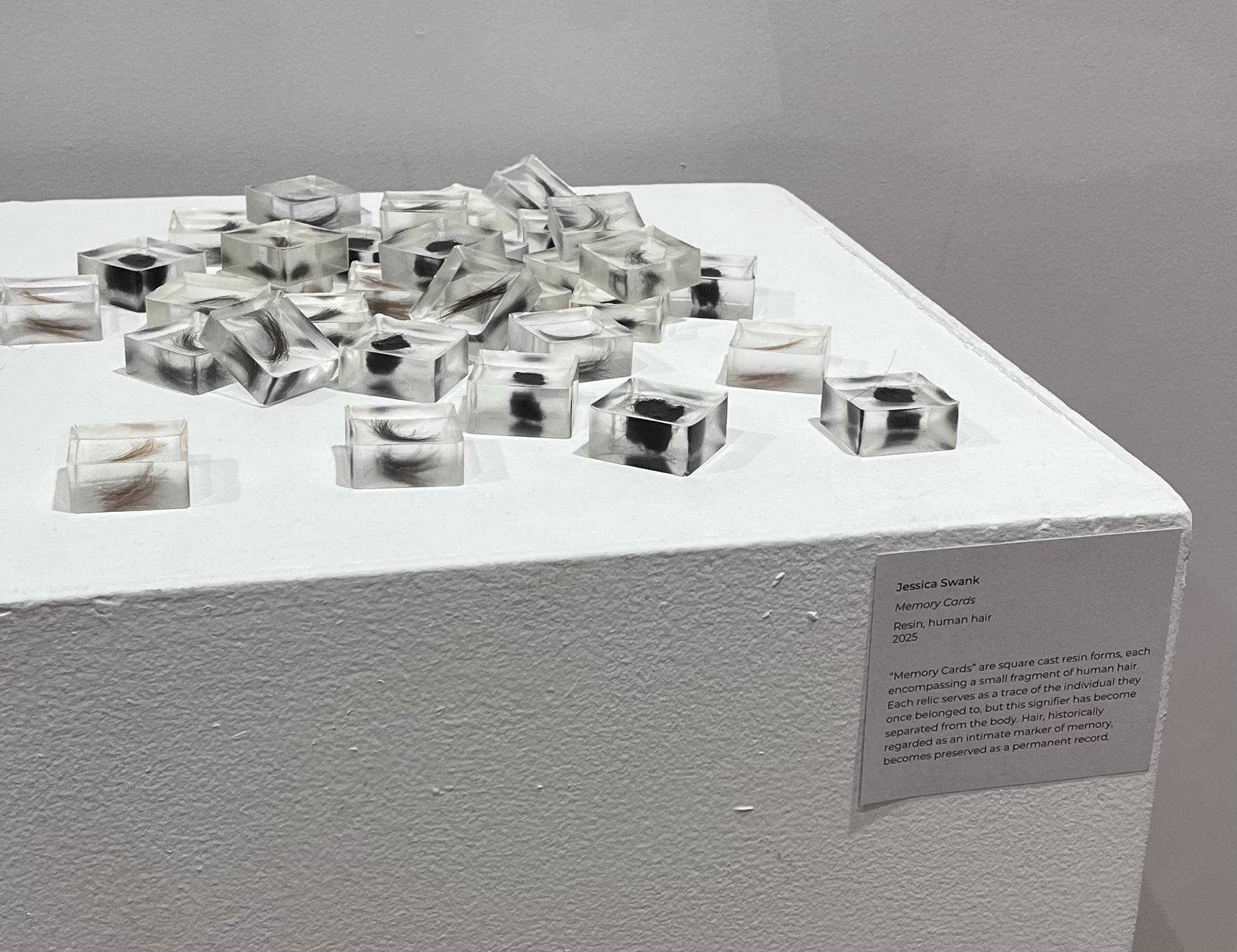
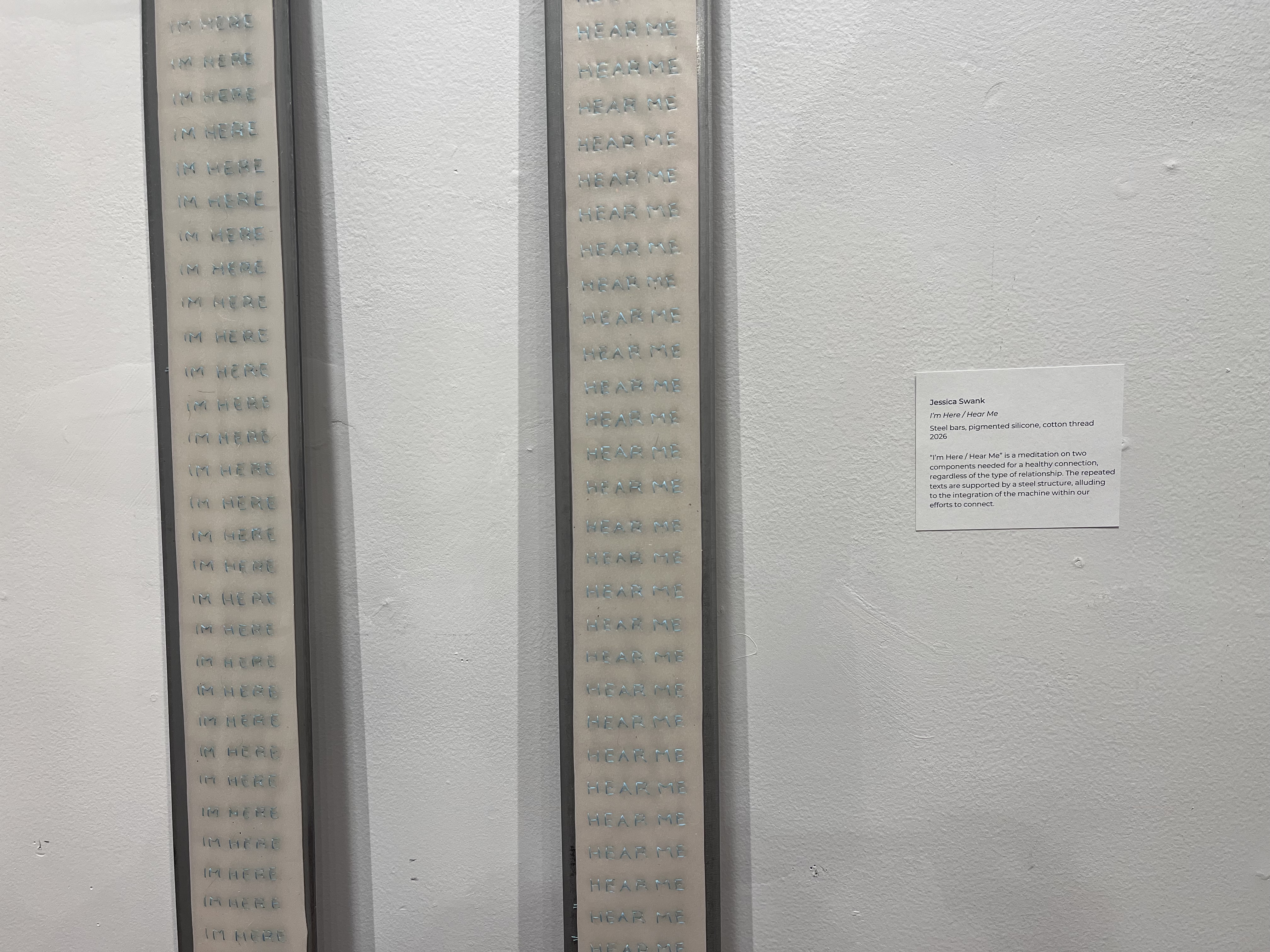
Astonishingly, the art also replied only in statements, saying:
“This is…”
“It feels like…”
“Here is…”
“This is what it is…”
Without additional commentary as to morality, without presentation of a choice, without an offer of ethical management, the pieces simply exist. Individually, they are.
They sit. They lean. They drape. They suspend. Quietly, each one exists as a statement.
And juxtaposing each piece against the context of the concept, a quiet environment seems exposed. And the statement persists, “This is.”
My conclusion from listening to the lecture and the statements of each art piece, I hear a gentle reverberation of a fact: technology already exists and without moral debate we already participate. We feel this environment. We feel just as the art pieces express. And technology simply is.
I appreciate artist Jessica Swank for her acknowledged experiential exposure through each art piece because for a moment I got to feel a cancellation of the ever-present reverberation of technology. The comradery of experiences equated to peace. I walked away from the exhibit with a clarity in my mind, saying in agreement:
“Yes, it feels like that.”
And by me hearing the experiences of Jessica Swank as she processes technology and society and individuality and exposure and thought and what is made additional to society, I feel seen, too. Yes, I live in a complex world. But I live in it with many others. And it is as she said:
“It is.”